
Three-in-one fern (Asplenium dimorphum)
Asplenium dimorphum is a fern; the genus Asplenium as a whole may have a clumping or creeping growth habit. It is reported to be perennial.
Overview
Asplenium dimorphum is a fern; the genus Asplenium as a whole may have a clumping or creeping growth habit. It is reported to be perennial.
Origin and habitat
Asplenium dimorphum is native to Norfolk Island.
Characteristics
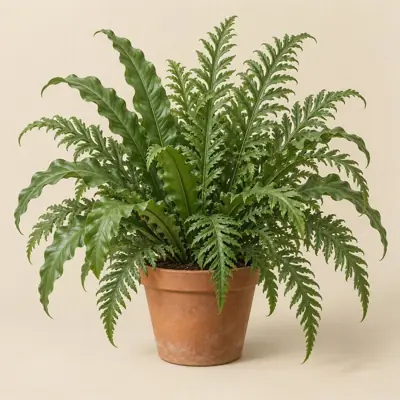
Sources differ on mature height, giving a range of about 61–152 cm. It is reported to have green, compound-looking fronds with a finely divided, lacy appearance, with narrow leaflets along a central rachis supported by slender, dark stalks or rachises. It is reported to have no flowers and to produce no fruit, reproducing by spores.
Light
It is reported to prefer partial to bright shade and to avoid direct sunlight; it can tolerate shade, but prolonged low light may lead to weak, elongated fronds. It is generally described as tolerating part sun.
Watering
It is reported to need regular watering during the growing season, with watering as the medium begins to dry from spring through autumn and drier conditions in winter; genus-level information also recommends frequent foliar watering throughout the year. The moisture target is generally to keep slightly dry.
Temperature and dormancy
The few available sources indicate a minimum temperature of about -1.1 °C. Sources differ on its reported USDA hardiness-zone classification. It is generally described as tolerating brief light frost and as half hardy.
Growing medium and mounting
It is reported to grow in a humus-rich, well-drained medium; a genus-level source also gives an example mixture using fine-grained akadama and leaf mold.
Feeding
It is reported to receive slow-release chemical fertilizer from spring through autumn.
Propagation
Asplenium species are reported to be propagated from spores, while some can also be divided; the source also notes that types forming plantlets on their fronds can be propagated by removing those plantlets.
Common problems
Reported pests include scale insects, spider mites, and slugs, with slug feeding potentially deforming fronds. Anthracnose and soft rot are reported as possible diseases. Prolonged low light is reported to cause weak, elongated fronds, and direct sunlight should be avoided. Young plants are reported to need protection from cold, while mature plants can withstand only brief light frost.
Identification
The fronds have a finely divided, lacy green appearance; sori in the genus Asplenium are typically linear and arranged along the central veins of the pinnae.
Photos


