
intermediate cattleya (Cattleya intermedia)
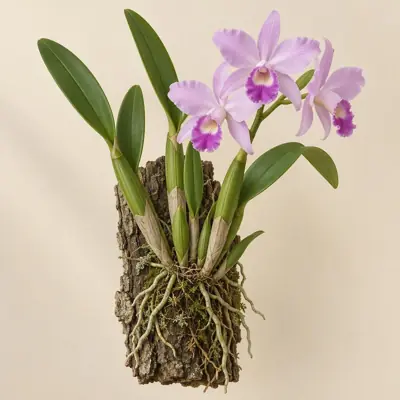
Cattleya intermedia is an evergreen, clumping epiphytic orchid with pseudobulbs and can also grow on rocks in the wild. It is reported to be perennial.
Overview
Cattleya intermedia is an evergreen, clumping epiphytic orchid with pseudobulbs and can also grow on rocks in the wild. It is reported to be perennial.
Origin and habitat
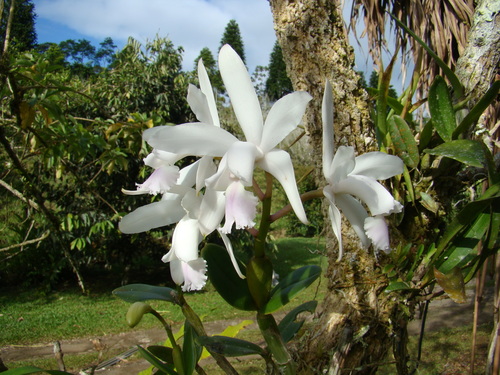
Its native range is in South America, including central-southern to southern Brazil, Uruguay, and Argentina; Brazilian records include São Paulo, Santa Catarina, and Rio Grande do Sul, with another source also recording Rio de Janeiro. It occurs in Atlantic coastal forests and coastal environments, growing epiphytically on small trees or on rocks, often near the coast, streams and other waters, wetlands, and lagoons; some habitats are extremely humid and exposed to sea spray. It is adapted to cool through warm conditions, while its natural coastal habitats can be very humid and hot; cultivation requires good airflow.
Characteristics
A single source reports a mature height of about 50–100 cm and a mature spread of about 10–50 cm, so sources are few. Sources differ in their descriptions of the foliage, but the pseudobulb apex generally bears a small number of leaves, with a more detailed account describing several apical, nearly opposite leaves. The flowers are fragrant, thick-textured, relatively long-lasting, and highly variable in color, with multiple flowers borne on each inflorescence and individual flowers being large. Flowering occurs from spring through summer.
Light
Sources differ in describing its light requirements: bright light to partial shade and some direct sun are reported, while hot midday direct sun should be shaded and species-specific cultivation information particularly recommends ample morning light. A specialist source reports about 21530–37700 for light, but sources are few. It is characterized as requiring high light.
Watering
Water regularly during growth, using a rapidly draining medium and avoiding standing water; reduce watering in winter, and for epiphytic Cattleya the general cultivation principle is to water thoroughly and then let the medium dry before watering again. A specialist source generally recommends letting it dry between waterings.
Humidity and airflow
A specialist source reports humidity of about 40–70 %, but sources are few. It is generally reported to prefer high humidity and need good airflow. A specialist source likewise reports that it needs good airflow.
Temperature and dormancy
Sources differ on the reported temperature limits, with a lower value of about 15 °C and an upper value of about 28 °C. A single source reports an ideal range of about 15–28 °C, so sources are few. It is generally reported as RHS H1A. A specialist source generally places it in the cool to intermediate temperature group.
Growing medium and mounting
A single source recommends an open, coarse, well-drained bark-based orchid medium that may include horticultural grit and coconut-husk material; moisture conditions should be well drained or moist while still draining well, with a neutral pH. Cattleya intermedia is epiphytic and has a preference for bark. A single source reports fleshy roots.
Feeding
Feed regularly during growth and reduce feeding in winter.
Propagation
A single source reports that mature plants can be propagated by division, with each division retaining several older growths to provide sufficient stored water and energy.
Common problems
A single source reports that greenhouse red spider mites, scale insects, and mealybugs may be pests, while thrips may damage flowers. Disease is generally uncommon, but poor airflow can contribute to bacterial or fungal rot, and orchid cultivation also requires attention to the spread of viral disease. Standing water or poor airflow increases the risk of rot, while either excessive dryness or excessive wetness does not provide the rapid wet-dry cycle required by its epiphytic roots. A single source recommends shading from hot midday direct sun and reports lower winter and upper summer temperature limits for cultivation.
Identification
The pseudobulbs are slender and cylindrical, enclosed by tubular dry membranous bracts and bearing a small number of leaves at the apex; mature new pseudobulbs produce apical inflorescences with large, fragrant flowers showing marked color variation.
Photos


Sources
- Wikipedia (en): Cattleya intermedia — CC BY-SA 4.0 · link
- Wikipedia (es): Cattleya intermedia — CC BY-SA 4.0 · link
- Wikipedia (pt): Cattleya intermedia — CC BY-SA 4.0 · link
- RHS Plants: Cattleya intermedia — © RHS, facts only · link
- Internet Orchid Species Photo Encyclopedia: Cattleya intermedia — © Jay Pfahl / IOSPE contributors, facts only · link
- AOS culture sheet: Cattleya (genus-level) — © American Orchid Society, facts only · link
- NHK みんなの趣味の園芸 植物図鑑: Cattleya (genus-level) — © NHK出版, facts only · link
- NC State Plant Toolbox: Cattleya (genus-level) — copyright (facts only) · link