
Egyptian lime (Citrus aurantiifolia)
Citrus aurantiifolia is a highly branched, thorny small tree that may also grow as a shrub. It is reported to be perennial.
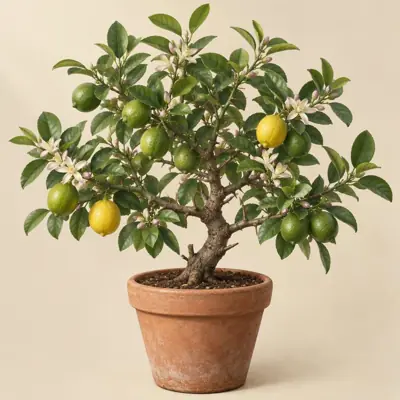
Overview
Citrus aurantiifolia is a highly branched, thorny small tree that may also grow as a shrub. It is reported to be perennial.
Origin and habitat
Sources differ on its native range within Asia, variously placing it from India toward Southeast Asia, in the East Indies, or in Southeast Asia. It is reported to favor consistently warm conditions and to be cultivated in tropical and subtropical regions; in colder temperate conditions, cold periods and cold winds should be avoided. In cultivation, it is reported to suit sunny, well-drained, well-ventilated sites, while its shallow root system may anchor better in prepared soil.
Characteristics
A source reports a mature height of about 0–500 cm, but sources are few. Seed-grown plants are reported to take several years to begin fruiting and longer to reach maximum production. The leaves are reported to be ovate and resemble those of Citrus aurantium; the yellowish-white flowers have pale purple along the petal margins, and flowering and fruiting can occur throughout the year, with a period of greatest abundance in the Northern Hemisphere. The fruit is reported to be nearly spherical and sometimes tipped by an apical nipple, green when unripe and yellow when mature, with a very thin, densely oil-glanded rind and juicy, highly acidic, aromatic yellow-green flesh; the seeds are small, plump, ovate, pale and smooth, with white polyembryonic embryos.
Light
It is reported to prefer full sun with good ventilation.
Watering
It is reported to require a well-drained growing medium, while horticultural information for Citrus also advises against allowing the soil to dry out completely.
Humidity and airflow
It is reported to prefer high humidity and needs good airflow.
Temperature and dormancy
It is generally frost tender; keep above freezing.
Growing medium and mounting
It is reported to prefer well-drained soil, while information for Citrus also indicates that a fertile growing medium is suitable.
Propagation
It is reported to be propagated by seed, cuttings, air layering, transplanting root suckers, or budding; seeds should be kept moist because drying may prevent germination, while vegetative propagation may lead to earlier fruiting. Clonal plants are reported to be commonly budded onto rootstocks such as rough lemon or bitter orange, and rootstocks less susceptible to gummosis may also be selected.
Common problems
Common pests reported for Citrus include citrus whitefly, mealybugs, citrus red mite, flatid planthoppers, and leafminers. Seed-grown plants are more susceptible to gummosis, while Citrus information also lists citrus black spot, citrus canker, and sweet orange scab. Its shallow root system is reported to affect anchorage and wind resistance, while inadequate canopy airflow and light can hinder drying and may increase risks associated with gummosis. It is sensitive to cold and cold winds, and most citrus does not tolerate frost; in colder climates, dwarf plants can be moved indoors during winter.
Identification
The plant is reported to be thorny and to bear small acid-lime fruit; compared with Persian lime, Citrus × latifolia, its fruit is smaller and thinner-skinned, with more seeds and stronger acidity and aroma.
Sources
- Wikipedia (en): Key lime — CC BY-SA 4.0 · link
- Wikipedia (en): Citrus aurantiifolia — CC BY-SA 4.0 · link
- GBIF descriptions: Checklist of introduced taxa in Cyprus; The medicinal plants of Myanmar — per dataset · link
- TaiCOL 臺灣物種名錄: Citrus aurantiifolia — CC BY 4.0 · link
- USDA PLANTS Database: Citrus aurantiifolia — Public domain (US Government work) · link
- NC State Plant Toolbox: Citrus (genus-level) — copyright (facts only) · link