
Fork-leaved Sundew (Drosera binata)
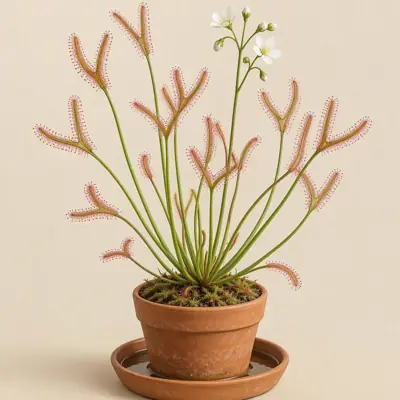
Drosera binata is a large, clumping, carnivorous herb with leaves growing from a basal rosette, and it is perennial.
Overview
Drosera binata is a large, clumping, carnivorous herb with leaves growing from a basal rosette, and it is perennial.
Origin and habitat
Sources differ on its native range, describing it from southeastern Australia and New Zealand, including coastal Queensland south through New South Wales and Victoria to Tasmania and southeastern South Australia, as well as the North Island, South Island, Stewart Island/Rakiura and the Chatham Islands. It grows in moist environments including swamps, wet sandy ground, sandy peatland, stream banks and rocky shelves; in New Zealand it is generally found at lower elevations. It is reported from temperate to subtropical environments, with some populations entering winter dormancy while others have a tropical form.
Characteristics
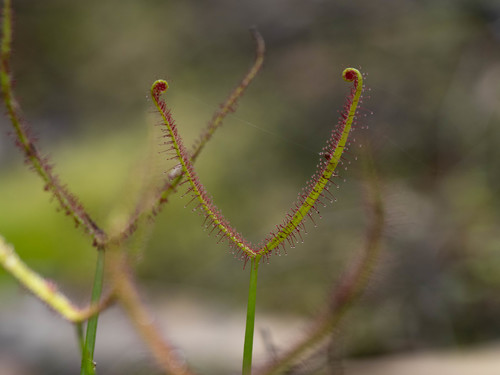
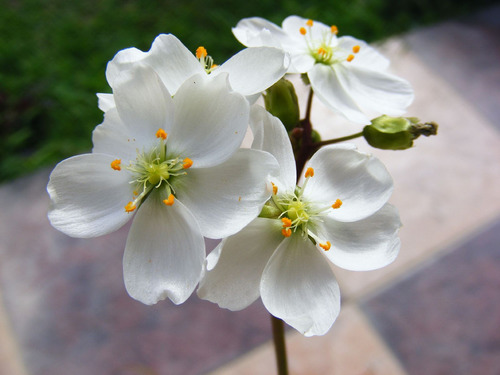
Mature plants reach 10–50 cm in height; based on few sources, their spread is reported to be about 10–50 cm. Sources differ in their descriptions of leaf dimensions, but agree that the leaves are narrow and forked, usually dividing once and sometimes dividing again; they bear red glandular hairs and mucilage that capture and digest insects, and cultivated forms can develop additional terminal branches. The white flowers are borne in clusters on inflorescences held above the foliage. Flowering is described across an extended period, while RHS describes it as summer flowering in Northern Hemisphere horticultural terms; the fruit is reported to be a nearly ovoid to nearly round capsule containing many small, narrow seeds.
Light
Drosera binata grows in full sun or very bright conditions; greenhouse plants can receive ample light, with some shading in hot, intense light.
Watering
Keep the medium wet during growth, using pure water only (rain, RO or distilled); tray (bottom) watering is suitable. In winter, keep the medium moist but avoid excessive waterlogging.
Humidity and airflow
Based on few sources, humidity is reported at about 50–70 %, and the plant is generally described as needing good airflow.
Temperature and dormancy
Based on few sources, the reported minimum is about 0 °C, the ideal range about 20–35 °C, and the maximum about 35 °C. It is generally reported to be frost hardy. Sources differ on cold winter dormancy.
Growing medium and mounting
Use an acidic, moist, nutrient-poor peaty environment; sandy media are also suitable, including sand with peat.
Feeding
Fertilizer is generally not applied, and the plant is reported to grow without fertilizer or supplemental insect feeding.
Propagation
Drosera binata can be propagated from seed or root cuttings; some cultivation sources also describe leaf cuttings, and new plants can sprout from the roots.
Common problems
RHS reports that pests are generally uncommon, while general sundew cultivation information notes that aphids may occur with poor airflow and spider mites may occur in hot, dry conditions. Disease problems are generally reported to be uncommon. The medium should not dry out, while winter-dormant plants should avoid excessive waterlogging. Weather tolerance varies considerably among forms: some are temperate and require cold winter dormancy, some are tropical, and NHK also notes that some forms do not tolerate high summer temperatures.
Identification
The most conspicuous features are narrow trapping leaves that fork or branch repeatedly, with branches densely covered in mucilage-secreting glandular hairs; the typical form has distinctly forked leaf tips.
Photos


Sources
- Wikipedia (en): Drosera binata — CC BY-SA 4.0 · link
- 維基百科:叉葉毛氈苔 — CC BY-SA 4.0 · link
- Wikipedia (de): Drosera binata — CC BY-SA 4.0 · link
- Wikipedia (fr): Drosera binata — CC BY-SA 4.0 · link
- Wikipedia (es): Drosera binata — CC BY-SA 4.0 · link
- RHS Plants: Drosera binata — © RHS, facts only · link
- NHK みんなの趣味の園芸 植物図鑑: Drosera binata — © NHK出版, facts only · link
- NC State Plant Toolbox: Drosera (genus-level) — copyright (facts only) · link
- Drosera binata Sundew – California Carnivores (californiacarnivores.com) — facts only (§12) · link
- VicFlora: Drosera binata (vicflora.rbg.vic.gov.au) — facts only (§12) · link