
Hoya linearis (Hoya linearis)
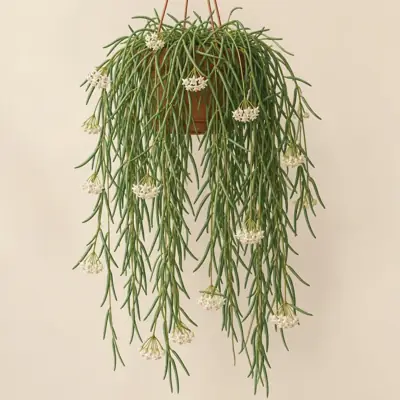
Hoya linearis is a trailing, epiphytic, semi-succulent perennial with slender, flexible stems. It is an evergreen perennial.
Watch: 21 Hoyas: Water Less, Wait Longer
Overview
Hoya linearis is a trailing, epiphytic, semi-succulent perennial with slender, flexible stems. It is an evergreen perennial.
Origin and habitat
Sources differ on the native range, describing the Himalayas and neighboring parts of Asia, including Nepal, India including Sikkim, Myanmar, and southern China including Yunnan and Tibet, while another account summarizes the range as Nepal to China and Indochina. Sources differ in habitat accounts; it is described as epiphytic and typically growing in evergreen forest.
Characteristics
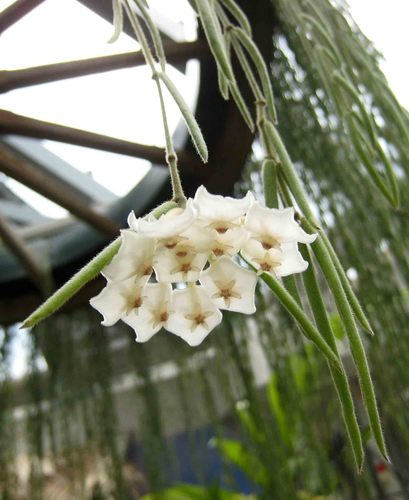
Mature height is 100–150 cm. The mature spread is reported by a single source at about 10–50 cm. The opposite leaves are linear to nearly cylindrical, fleshy, dark green, slightly hairy, wedge-shaped at the base and pointed at the tip, with a groove on the underside. The fragrant, star-shaped flowers are white to creamy white and borne in clusters or umbels, with coronas that may be pale pink or pale yellow; sources differ on the flowering season, placing it from late summer into autumn, and fruit is reported by a single source to be spindle-shaped, with seeds bearing white tufts of hair.
Light
Hoya linearis grows in bright, indirect light to partial sun and can accept full sun or partially shaded positions, but cultivation guidance recommends avoiding hot, intense direct sunlight.
Watering
Water moderately during the growing period in a well-drained medium, watering after the surface dries and avoiding waterlogging; keep the medium only slightly moist in winter.
Temperature and dormancy
Sources differ on its hardiness-zone classification. It is generally considered frost tender; keep above freezing.
Growing medium and mounting
Use a fast-draining, well-aerated medium; recommendations include a peat-free, loam-based medium with additional organic matter, while loamy and sandy soils and acidic, neutral, or alkaline conditions are also listed.
Feeding
A single source recommends applying a balanced liquid fertilizer regularly during the growing period.
Propagation
A single source reports propagation by layering in spring or summer, or by taking semi-ripe cuttings in late summer and using bottom heat to encourage rooting.
Common problems
Mealybugs may occur, while genus-level Hoya information also lists aphids and spider mites. Disease is generally reported to be uncommon, although genus-level Hoya information indicates that an excessively wet medium may lead to root rot. Waterlogging or persistently wet roots may cause root rot, so a wet, poorly draining medium should be avoided. A single source reports sensitivity to frost and low temperatures and recommends protection from freezing in cold areas.
Identification
Hoya linearis is distinguished by slender trailing stems, nearly cylindrical linear fleshy leaves, and clusters of fragrant white star-shaped flowers.
Photos


Sources
- Wikipedia (en): Hoya linearis — CC BY-SA 4.0 · link
- 維基百科:线叶球兰 — CC BY-SA 4.0 · link
- Wikipedia (de): Hoya linearis — CC BY-SA 4.0 · link
- RHS Plants: Hoya linearis — © RHS, facts only · link
- NC State Plant Toolbox: Hoya (genus-level) — copyright (facts only) · link
- Top Tropicals catalog: Hoya linearis — © Top Tropicals LLC (facts only) · link