
Chinese Juniper (Juniperus chinensis)
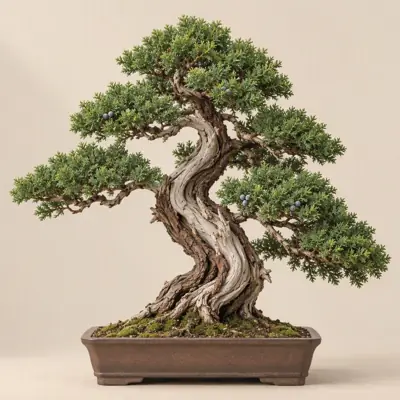
Juniperus chinensis is a perennial evergreen conifer that may grow as a tree or shrub, with form varying greatly among cultivars; 'Itoigawa' is a cultivated form used for bonsai.
Overview
Juniperus chinensis is a perennial evergreen conifer that may grow as a tree or shrub, with form varying greatly among cultivars; 'Itoigawa' is a cultivated form used for bonsai.
Origin and habitat
Sources differ on its native range, describing East Asia and adjacent regions including China, Japan, the Korean Peninsula, Taiwan, Myanmar, and the Russian Far East, with some also including Mongolia. It occurs on coastal rocks, sandy ground, open rocky slopes, and in mountains; some alpine forms occur among boulders and rocky outcrops, and it can also grow in secondary vegetation, while cultivated plants are widespread in gardens, parks, and coastal environments. It has broad climatic adaptability, tolerating cold as well as strong sun, relatively dry conditions, and coastal environments.
Characteristics
Sources differ on mature height, giving a range of about 100–2500 cm. A single source reports a mature spread of about 400–800 cm. Sources differ in their descriptions of its growth rate, with slow growth reported. The foliage is dimorphic: juvenile leaves are needle-like, while mature leaves are usually scale-like and closely pressed to the twigs; needle-like juvenile foliage can still occur on lower, shaded, or pruned branches of mature plants, and foliage is mainly green to dark green. It is reported to lack typical flowers and instead bears male and female cones, usually on separate plants but occasionally on the same plant; the male cones are small and are usually borne at the tips of scale-leaved twigs. Sources differ on the reproductive season, describing it from late winter through spring, with some reporting pollen release from male cones in early spring; sources also differ in descriptions of the nearly spherical, fleshy, berry-like seed cones, which mature to black-purple, blue-black, or another dark color and often have a whitish bloom, contain multiple seeds, and take an extended period to mature.
Light
It grows in full sun to partial sun.
Watering
The growing medium should drain well and may be kept moderately moist, although established plants tolerate some drought; container plants should be watered after the surface begins to dry and supplied with water regularly in summer.
Temperature and dormancy
It is generally frost hardy. A single source reports cold tolerance to about -30 °C. Sources differ in descriptions of its hardiness-zone range.
Growing medium and mounting
It adapts to varied soils but requires good drainage and can grow in sandy, loamy, clay, and calcareous soils under acidic through alkaline conditions; some sources indicate a preference for neutral to slightly alkaline conditions.
Propagation
The species can be propagated from seed, while cultivars can be grafted; propagation from semi-hardwood cuttings is also reported.
Common problems
It is reported to be susceptible to aphids, scale insects, conifer red spider mites, and caterpillars. Reported diseases include Phytophthora, canker, honey-fungus-related disease, and rusts of the cedar-apple-rust type. Juniperus can serve as an alternate host for rust pathogens affecting fruit trees such as pears and apples, so planting nearby is restricted or avoided in some fruit-growing areas. Established plants in the ground tolerate drought, cold, and exposed conditions, but container-grown plants in cold regions need protection against freezing of the root zone.
Identification
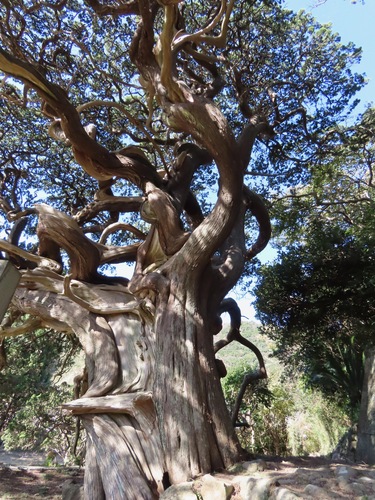
It is evergreen and may bear both needle-like juvenile leaves and scale-like mature leaves on the same plant; the foliage and branches are aromatic, and the trunk can develop a twisted form. Among Juniperus chinensis bonsai forms, 'Itoigawa' is valued for dense, fine foliage and good growth.
Photos


Sources
- Wikipedia (en): Juniperus chinensis — CC BY-SA 4.0 · link
- 維基百科:圓柏 — CC BY-SA 4.0 · link
- Wikipedia (ja): イブキ — CC BY-SA 4.0 · link
- Wikipedia (de): Chinesischer Wacholder — CC BY-SA 4.0 · link
- Wikipedia (fr): Genévrier de Chine — CC BY-SA 4.0 · link
- Wikipedia (es): Juniperus chinensis — CC BY-SA 4.0 · link
- GBIF descriptions: DAISIE - Inventory of alien invasive species in Europe; Chapter 7: Linnaean Plant Names and their Ty — per dataset · link
- NC State Plant Toolbox: Juniperus chinensis — copyright (facts only) · link
- TaiCOL 臺灣物種名錄: Juniperus chinensis — CC BY 4.0 · link
- Useful Tropical/Temperate Plants: Juniperus chinensis — CC BY-NC-SA 3.0 (facts only) · link
- RHS Plants: Juniperus chinensis — © RHS, facts only · link
- USDA PLANTS Database: Juniperus chinensis — Public domain (US Government work) · link
- Top Tropicals catalog: Juniperus chinensis — © Top Tropicals LLC (facts only) · link