
garden lettuce (Lactuca sativa)
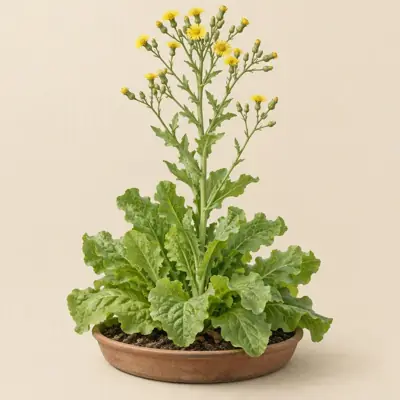
Lactuca sativa is an upright herb that forms a basal leaf rosette when young, then develops an erect stem that branches in its upper part after bolting. Sources differ in describing its life cycle as annual to biennial; in cultivation it is usually treated as an annual vegetable.
Overview
Lactuca sativa is an upright herb that forms a basal leaf rosette when young, then develops an erect stem that branches in its upper part after bolting. Sources differ in describing its life cycle as annual to biennial; in cultivation it is usually treated as an annual vegetable.
Origin and habitat
Lactuca sativa is a cultivated crop associated in origin with the Mediterranean and western Asia and may have been derived mainly from the wild Lactuca serriola; sources differ on whether it has a definable natural native range. It is reported to occur mainly in human-managed agricultural, horticultural, and garden settings and to be cultivated in temperate regions worldwide and in many tropical countries. It prefers cool growing conditions and does not tolerate high temperatures well; cool spring and autumn conditions suit cultivation, while high temperatures readily promote bolting.
Characteristics
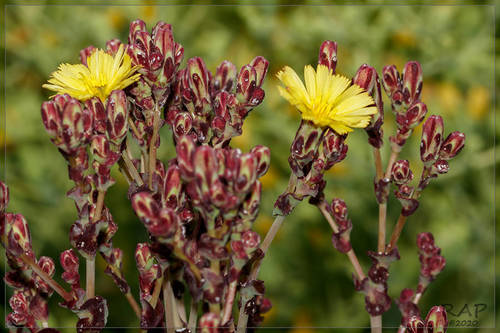
Sources differ on mature height, placing it at about 30–120 cm, while a limited source reports a mature spread of about 10–50 cm. Young plants form a basal leaf rosette; leaves range from green to reddish purple, and different cultivated forms may have loose, crinkled, deeply divided, upright, or head-forming leaves. After bolting, branched flowering stems bear many small flower heads, with flowers mainly yellow to pale yellow and resembling small dandelion flowers. It is reported to bolt and flower in summer, with high temperatures and long days promoting bolting; the achenes are reported to vary by cultivar from whitish gray or pale gray to brown or black and have white pappuses at their tips.
Light
It grows in full sun to partial sun; full sun is suitable in cool conditions, while moderate shade is more suitable in summer.
Watering
Keep the soil consistently moist but well drained and avoid drought; its relatively shallow roots mean water shortage may impair growth, promote bolting, and make the flavor bitter.
Humidity and airflow
It is reported to prefer low humidity.
Growing medium and mounting
It suits soil rich in organic matter that retains moisture while draining well; sources differ, with some also recommending a particular soil pH.
Feeding
It is reported that compost or fertilizer can be incorporated before cultivation and additional fertilizer applied during growth; its fertilizer requirements are described as relatively high.
Propagation
Propagation is by seed; seeds should receive only a very thin soil covering or none, and for summer sowing they can first absorb water and be refrigerated to help break dormancy.
Common problems
Possible feeding pests include aphids, noctuid larvae, lettuce root aphids, and rabbits. Possible diseases include Sclerotinia rot, soft rot, damping-off, gray mold, and downy mildew. High temperatures or drought can promote premature bolting and reduce quality, while head-forming types may fail to form heads normally under unsuitable high-temperature conditions. It is reported to be sensitive to high temperatures and high humidity; high temperatures and long days readily induce bolting, while rainy, humid conditions increase disease risk.
Identification
Distinguishing features include the leaf rosette and, after mature plants bolt, an upright branched flowering stem with small yellow flower heads; cultivars vary greatly in leaf color and shape and in whether they form heads.
Photos


Sources
- Wikipedia (en): Lettuce — CC BY-SA 4.0 · link
- 維基百科:莴苣 — CC BY-SA 4.0 · link
- Wikipedia (ja): レタス — CC BY-SA 4.0 · link
- Wikipedia (de): Gartensalat — CC BY-SA 4.0 · link
- GBIF descriptions: Manual of the Alien Plants of Belgium; Database of Vascular Plants of Canada (VASCAN); Checklist of — per dataset · link
- NC State Plant Toolbox: Lactuca sativa — copyright (facts only) · link
- Useful Tropical/Temperate Plants: Lactuca sativa — CC BY-NC-SA 3.0 (facts only) · link
- RHS Plants: Lactuca sativa — © RHS, facts only · link