
French lavender (Lavandula dentata)
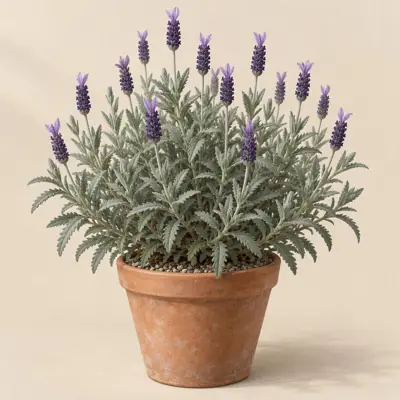
Lavandula dentata is an evergreen, branching, shrubby aromatic plant and is reported to be perennial.
Overview
Lavandula dentata is an evergreen, branching, shrubby aromatic plant and is reported to be perennial.
Origin and habitat
Lavandula dentata is mainly distributed in the Mediterranean region, including Spain, North Africa and some Mediterranean islands, extending east to Palestine, the Arabian Peninsula and Yemen, and into Ethiopia and Eritrea in northeastern Africa; multiple sources also record it from Madeira and the Canary Islands. It occurs in dry, sunny scrub, low mountain and rocky habitats, with several sources particularly recording calcareous substrates and some also recording clay or siliceous soils; sources differ on details of its habitat range. It favors warm, dry warm-temperate to subtropical environments, is adapted to arid and semi-arid conditions, and is more sensitive to cold and persistent winter wetness.
Characteristics
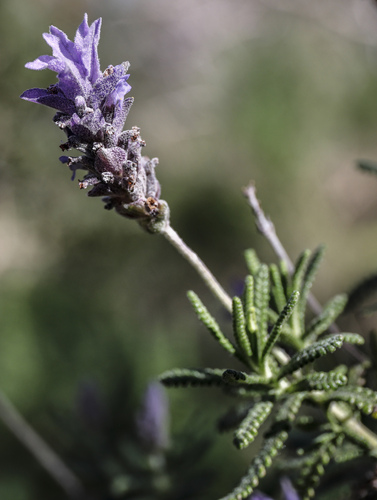
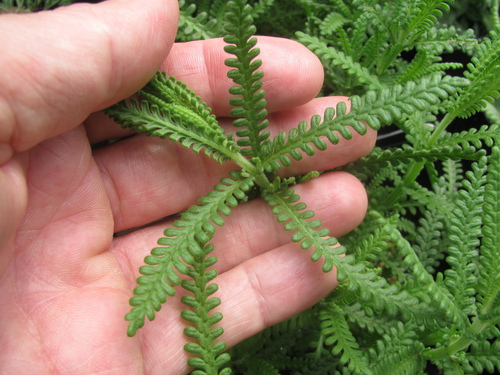
Sources differ on mature height, placing it at about 20–100 cm, while mature spread is 100–150 cm. The opposite leaves are narrow to lance-shaped and gray-green to dark green, with conspicuously finely toothed, lobed or comb-like margins; some sources also describe the leaf surface as hairy. The dense spike-like inflorescences are mainly purple to violet-blue, with conspicuous purple or pale-purple bracts at the top, and the individual flowers are two-lipped; flowering is mainly from late spring through summer, although sources differ and indicate that flowering may continue year-round in warm, frost-free climates. The fruit is reported to consist of small nutlet-like segments.
Light
Lavandula dentata grows in full sun and is suited to a warm, sunny position.
Watering
It is suited to relatively dry, well-drained growing conditions, with prolonged wetness or waterlogging especially to be avoided during cold periods.
Humidity and airflow
It is reported to need little air movement.
Temperature and dormancy
Sources differ, but the reported minimum temperature is about -5 °C. It is reported to have an RHS hardiness rating and generally tolerates brief light frost.
Growing medium and mounting
It requires good drainage and can grow in chalk, loam or sand, and is also found on calcareous substrates. Sources differ on soil preferences: it tolerates a range of soil acidity and alkalinity, while some sources indicate that overly acidic soil is unsuitable and that calcareous soil favors aroma development.
Feeding
For essential-oil or aroma production, overly fertile soil is reported to be unsuitable, as fertile conditions may increase leaf growth while reducing essential-oil yield.
Common problems
Lavandula species are reported to develop leaf spot and root rot when soil is excessively wet. Excess winter wetness and low temperatures are major cultivation problems; plants may also be relatively short-lived and can gradually develop loose growth without pruning. Lavandula dentata is sensitive to cold and cold, wet winter conditions, needs a more sheltered position in frost-prone areas, and is also poorly suited to strong winds.
Identification
Sources differ in their descriptions, but distinguishing features include narrow leaves with toothed or divided margins, purple spike-like inflorescences, larger purple bracts at their tips, and a strong aroma throughout the plant.
Photos


Sources
- Wikipedia (en): Lavandula dentata — CC BY-SA 4.0 · link
- Wikipedia (de): Französischer Lavendel — CC BY-SA 4.0 · link
- Wikipedia (fr): Lavandula dentata — CC BY-SA 4.0 · link
- Wikipedia (es): Lavandula dentata — CC BY-SA 4.0 · link
- GBIF descriptions: Manual of the Alien Plants of Belgium; DAISIE - Inventory of alien invasive species in Europe; Globa — per dataset · link
- Wikipedia (it): Lavandula dentata — CC BY-SA 4.0 · link
- Useful Tropical/Temperate Plants: Lavandula dentata — CC BY-NC-SA 3.0 (facts only) · link
- RHS Plants: Lavandula dentata — © RHS, facts only · link