
Lepismium bolivianum (Lepismium bolivianum)
Lepismium bolivianum is reported to be an evergreen, epiphytic cactus with trailing, spreading stems.
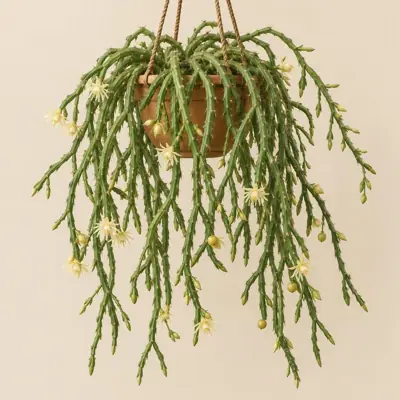
Overview
Lepismium bolivianum is reported to be an evergreen, epiphytic cactus with trailing, spreading stems.
Origin and habitat
Sources differ; Bolivia is given as its native range.
Characteristics
With few sources available, mature height is reported at about 50–100 cm and mature spread at about 10–50 cm. The source does not describe true leaves; the main visible structures are reported to be green, flat, narrow stems with a central ridge and alternating wavy indentations and projections along the margins. The flowers are reported to be funnel-shaped, white or pink, and borne from areoles from spring through summer.
Light
It is reported to suit bright filtered or indirect light, while full sun or part shade is also listed as acceptable; bright light or part shade is indicated.
Watering
It is reported to need ample watering during the growing period, reduced watering at other times, and a well-drained growing medium.
Temperature and dormancy
Its hardiness is reported as RHS H1B.
Growing medium and mounting
As an epiphytic plant, it is reported to suit a well-drained epiphytic cactus medium, with loam and sand listed as soil types and acidic, neutral, or alkaline conditions listed as suitable. It is reported to need a fast-draining mix.
Feeding
A balanced liquid fertilizer is reported to be applied during the growing period.
Propagation
It is reported to be propagated from seed in spring or by rooting stem cuttings in spring or summer.
Common problems
It is reported to be susceptible to mealybugs and generally to have no significant disease problems. A sheltered position is reported to be suitable.
Identification
It is reported to have green, flat, narrow, trailing stems with a central ridge and alternating wavy indentations and projections along the margins, with white or pink funnel-shaped flowers emerging from areoles from spring through summer.