
edging lobelia (Lobelia erinus)
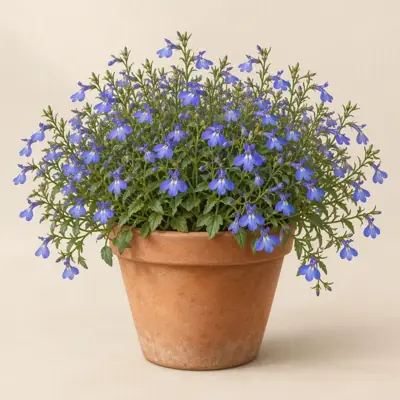
Lobelia erinus is a low-growing herb with a clumping, creeping, or trailing habit and fine, branching stems. It can be perennial in its native environment but is commonly grown horticulturally as an annual, especially in temperate or cooler regions.
Overview
Lobelia erinus is a low-growing herb with a clumping, creeping, or trailing habit and fine, branching stems. It can be perennial in its native environment but is commonly grown horticulturally as an annual, especially in temperate or cooler regions.
Origin and habitat
Lobelia erinus is native to southern Africa; more detailed accounts extend its native distribution from Malawi, Mozambique, Zambia, and Zimbabwe southward through Botswana, Namibia, Eswatini, Lesotho, and South Africa, while some sources describe the range more generally as South Africa or southern Africa, so sources differ in how the range is stated. In the wild it occurs in forests or natural areas, moist woodland and fields, and beside streams, and plants escaping cultivation may also become naturalized. It prefers cooler growing conditions and can behave as a perennial under subtropical conditions, while it is commonly grown as an annual in temperate climates; performance is poorer in hot or warm, humid conditions.
Characteristics
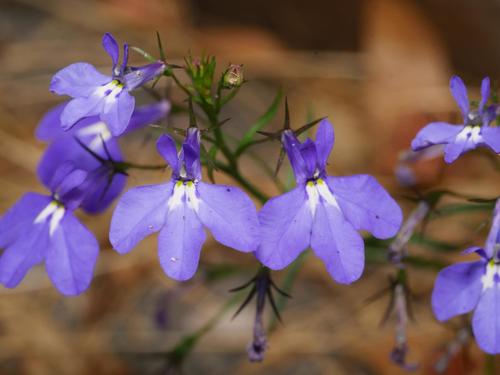
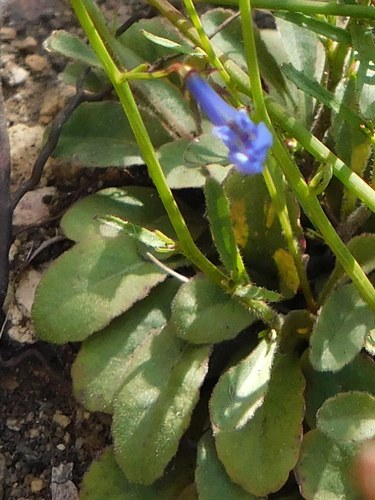
Sources differ on mature height, placing it at about 8–20 cm, while a single source reports a mature spread of about 10–50 cm. Seedlings can germinate uniformly relatively soon after sowing, but the sources do not provide a standardized mature growth rate; leaves are small, with basal leaves that may be oval and toothed and upper leaves that are narrower and sometimes untoothed, while cultivated varieties range from light to dark green and may have bronze coloration. The small, bilaterally symmetrical flowers have a divided, two-lipped corolla with a fan-shaped, lobed lower lip; wild plants are mainly blue to purple, while cultivated varieties can also be white, pink, red, or purple, with white or yellow centers. Sources differ on flowering season according to climate, while the fruit is generally reported to be a capsule containing many tiny seeds.
Light
Grow in full sun to partial sun; in Taiwan, strong afternoon sun should be avoided during the hottest summer conditions while maintaining ventilation.
Watering
Water regularly and keep the soil moist but well drained; Lobelia erinus does not tolerate drought, waterlogging, or prolonged standing moisture.
Humidity and airflow
It is generally reported to prefer low humidity and need good airflow.
Temperature and dormancy
A single source places the ideal temperature at about 15–25 °C. Sources differ on its hardiness and overwintering range. It is generally considered frost tender; keep above freezing.
Growing medium and mounting
Use fertile, organic-rich soil that remains consistently moist but drains well; sources from Taiwan recommend loose, sandy loam.
Feeding
Fertilizer can be applied regularly during growth and flowering; Taiwan sources recommend light applications of liquid flower fertilizer during flowering, while RHS recommends a balanced fertilizer from spring into early summer and a nitrogen-free fertilizer after midsummer.
Propagation
Lobelia erinus can be propagated by seed; Taiwan sources describe sowing under moderately warm conditions and transplanting after several true leaves develop, while Japanese sources note that the seeds are extremely fine and can be sown uncovered with water supplied from below, so sources differ in their propagation guidance.
Common problems
Slugs and snails are reported to damage the plant, while RHS generally reports few disease problems. It does not tolerate drought or waterlogged soil; in Taiwan, direct exposure to rain or poor drainage can cause rapid rotting, and plants can also be difficult to maintain during hot, humid conditions. It is sensitive to extreme heat, high humidity, waterlogging, and frost, and strong summer afternoon sun in Taiwan is also unfavorable for growth.
Identification
Lobelia erinus is low-growing and often clumping or trailing, with many small, two-lipped flowers; cultivated varieties have diverse flower colors and often conspicuous white or yellow centers.
Photos


Sources
- Wikipedia (en): Lobelia erinus — CC BY-SA 4.0 · link
- Wikipedia (ja): ルリミゾカクシ — CC BY-SA 4.0 · link
- Wikipedia (de): Männertreu — CC BY-SA 4.0 · link
- Wikipedia (fr): Lobélie érine — CC BY-SA 4.0 · link
- Wikipedia (es): Lobelia erinus — CC BY-SA 4.0 · link
- GBIF descriptions: Manual of the Alien Plants of Belgium; Database of Vascular Plants of Canada (VASCAN); Lista de espe — per dataset · link
- NC State Plant Toolbox: Lobelia erinus — copyright (facts only) · link
- Wikipedia (it): Lobelia erinus — CC BY-SA 4.0 · link
- Wikipedia (nl): Tuinlobelia — CC BY-SA 4.0 · link
- Wikipedia (ko): 로벨리아 — CC BY-SA 4.0 · link
- 農業知識入口網 植物圖鑑: Lobelia erinus — © MOA, facts only · link
- RHS Plants: Lobelia erinus — © RHS, facts only · link
- USDA PLANTS Database: Lobelia erinus — Public domain (US Government work) · link
- Top Tropicals catalog: Lobelia erinus — © Top Tropicals LLC (facts only) · link