
Apple (Malus domestica)
Malus domestica is a perennial deciduous woody plant, typically a tree, though some databases also record a shrub form; the form and size of cultivated plants are strongly influenced by rootstock and pruning.
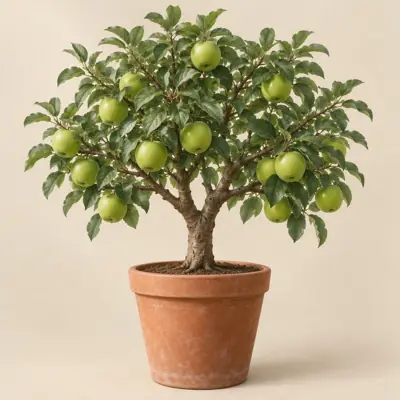
Overview
Malus domestica is a perennial deciduous woody plant, typically a tree, though some databases also record a shrub form; the form and size of cultivated plants are strongly influenced by rootstock and pruning.
Origin and habitat
Sources differ on the native range: it is described as originating mainly in Central Asia, while broader accounts also include Afghanistan, China, the Indian subcontinent, and Western Asia. It is now widely cultivated in orchards, food gardens, parks, and other managed settings, while some introduced-species records also place it along woodland edges, in scrub, and in woodland. It is mainly suited to temperate climates, with winter cold followed by release from dormancy and spring budding and flowering.
Characteristics
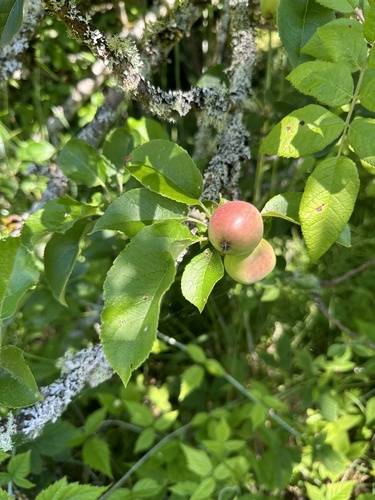
Sources differ, with the few available sources placing mature height at about 180–460 cm. The simple, alternate leaves are usually elliptical to ovate and green, generally with serrated margins; some sources describe soft hairs on the leaf undersides or young leaves. Flowers are usually white to pale pink and are commonly borne together in inflorescences, while the buds may be more distinctly red; flowering occurs in spring. The fruit is a pome, usually roughly spherical, with skin that can vary by cultivar among green, yellow, red, pink, or brown.
Light
It grows in full sun to partial sun.
Watering
It is reported to prefer moist but well-drained soil, while established plants can tolerate some alternation between drier and wetter conditions.
Temperature and dormancy
An RHS hardiness classification is reported for the species.
Growing medium and mounting
It can be grown in chalk, clay, loam, or sandy soil across acidic, neutral, and alkaline conditions, with moist but well-drained soil being important.
Propagation
Cultivars are generally propagated vegetatively by grafting onto rootstocks; seedlings often differ greatly from their parents and are slower to bear fruit.
Common problems
Reported pests include apple maggot, white apple leafhopper, apple bud moths, and mites. The species can be affected by various fungal, bacterial, and other diseases, with apple powdery mildew and cedar-apple rust specifically listed by sources. Fruit trees and their fruit may face various pest and disease pressures, and cultivars differ in their chilling requirements, so cultivar choice needs to match the local climate.
Identification
Malus domestica has white to pale pink flowers in spring followed by large pome fruits, while the eventual size and form of cultivated trees are strongly controlled by rootstock and pruning.
Photos


Sources
- 維基百科:苹果 — CC BY-SA 4.0 · link
- Wikipedia (en): Malus domestica — CC BY-SA 4.0 · link
- Wikipedia (ja): セイヨウリンゴ — CC BY-SA 4.0 · link
- Wikipedia (de): Kulturapfel — CC BY-SA 4.0 · link
- Wikipedia (fr): Pommier domestique — CC BY-SA 4.0 · link
- Wikipedia (es): Malus domestica — CC BY-SA 4.0 · link
- GBIF descriptions: Checklist of introduced taxa in Cyprus; Database of Vascular Plants of Canada (VASCAN); Checklist of — per dataset · link
- NC State Plant Toolbox: Malus domestica — copyright (facts only) · link
- RHS Plants: Malus domestica — © RHS, facts only · link
- USDA PLANTS Database: Malus domestica — Public domain (US Government work) · link