
capejewels (Nemesia strumosa)
Nemesia strumosa is an annual herb with an upright, multi-stemmed to clumping habit.
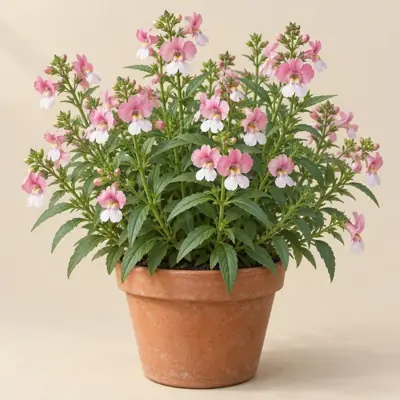
Overview
Nemesia strumosa is an annual herb with an upright, multi-stemmed to clumping habit.
Origin and habitat
Nemesia strumosa is native to the Cape region of southwestern South Africa. It prefers cool to mild climates; in frost-free areas it can be grown as a winter annual, while hot summers may cause decline.
Characteristics
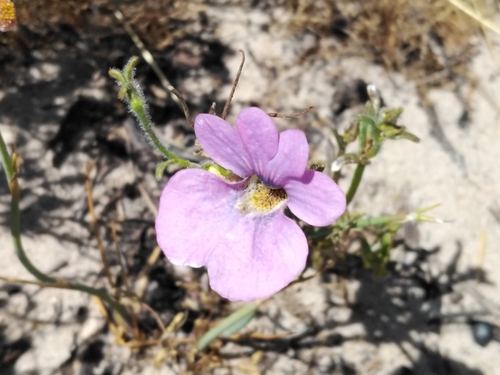
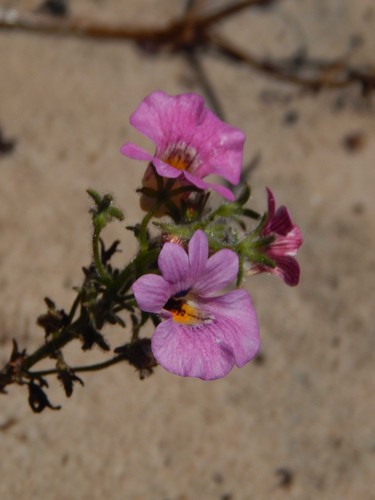
Sources differ, with the limited evidence placing mature height at about 15.24–30.48 cm and mature spread at about 15.24–30.48 cm. It is reported to grow quickly and has green, simple, opposite, lance-shaped, hairless leaves with toothed to nearly entire margins. The flowers are bilabiate to tubular, with a fan-shaped upper lip divided into lobes and a lower lip divided into lobes; they may occur singly in the leaf axils or in racemes and include yellow, orange, pink, cream, red, magenta, white, and bicolored forms. It is reported to flower from late spring until the first frost in mild climates, spanning spring, summer, and autumn, while flowering is generally better in spring or autumn in hot regions.
Light
Full sun is best, with partial afternoon shade acceptable during hot weather.
Watering
Keep the soil moist but well drained; water thoroughly in dry weather to maintain flowering and avoid waterlogging.
Temperature and dormancy
Nemesia strumosa has a reported USDA hardiness-zone range.
Growing medium and mounting
Sources differ in their descriptions of the growing medium, but report well-drained, moisture-retentive loamy or sandy soil and slightly acidic to neutral conditions.
Propagation
Propagate from seed, which can be sown in spring.
Common problems
Serious pest problems are generally uncommon, while root rot may occur and is more likely with poor drainage. Poor drainage may lead to root rot, and high summer temperatures can cause the plant to decline. It is reported to be sensitive to hot weather and to prefer cool to mild conditions; in hot regions it may decline in summer and is generally suited to spring or autumn cultivation.
Identification
Nemesia strumosa is a low-growing, upright to clumping flowering herb with opposite, lance-shaped leaves and brightly colored bilabiate flowers; the upper lip is fan-shaped and divided into lobes, while the lower lip is also divided into lobes.
Photos


Sources
- Wikipedia (en): Nemesia strumosa — CC BY-SA 4.0 · link
- GBIF descriptions: Database of Vascular Plants of Canada (VASCAN) — per dataset · link
- NC State Plant Toolbox: Nemesia strumosa — copyright (facts only) · link
- RHS Plants: Nemesia strumosa — © RHS, facts only · link
- USDA PLANTS Database: Nemesia strumosa — Public domain (US Government work) · link