
Boston swordfern (Nephrolepis exaltata)
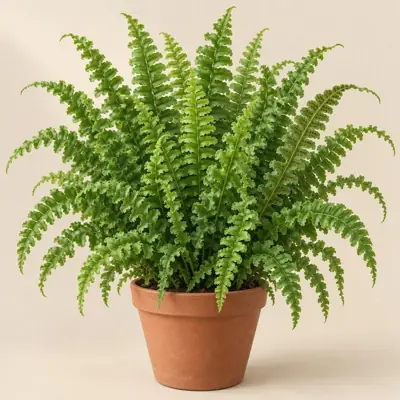
Nephrolepis exaltata is an evergreen, rhizomatous, perennial herbaceous fern that may be terrestrial or epiphytic, commonly forming clumps, with some plants producing stolons. It is generally described as terrestrial.
Overview
Nephrolepis exaltata is an evergreen, rhizomatous, perennial herbaceous fern that may be terrestrial or epiphytic, commonly forming clumps, with some plants producing stolons. It is generally described as terrestrial.
Origin and habitat
It is mainly native to tropical and subtropical parts of the Americas, including Florida, Mexico, Central America, the Caribbean, and South America; sources differ, with some also including Hawaii, Polynesia, and Africa in its natural or native range. It favors moist, shaded habitats and occurs in wetlands, swamps, and floodplains; it may grow terrestrially or epiphytically and less often on rocks, from low to middle elevations. Its climate is tropical to subtropical, warm, and humid.
Characteristics
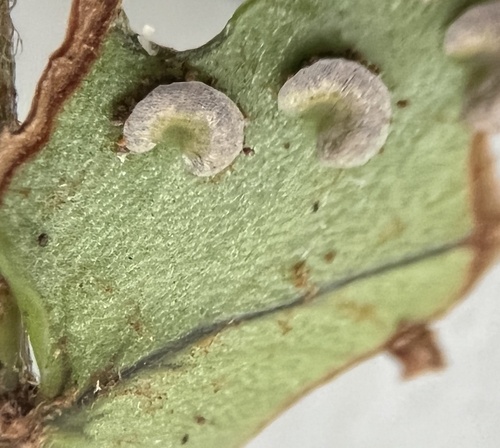
Sources differ on mature height, placing it at about 40–100 cm. A single source reports a mature spread of about 100–150 cm. The pinnately compound fronds are narrow and linear to lanceolate, usually taper toward the tip, have narrow pinnae and round sori on their undersides, and may arch and droop in cultivated forms.
Light
Bright indirect light is best for indoor cultivation; outdoors, partial shade to shade is preferred, with strong direct sunlight avoided.
Watering
During growth, keep evenly moist without waterlogging and do not allow the soil to dry out completely; reduce watering in winter, as excessive moisture may cause root or frond rot.
Humidity and airflow
It is generally reported to have a high humidity need.
Temperature and dormancy
A single source reports a minimum temperature of about 5 °C. Sources differ on the ideal temperature, placing it at about 15–25 °C. It is generally reported in a USDA hardiness zone and is tender.
Growing medium and mounting
Use a moist but well-drained, relatively nutrient-rich medium, such as loam or a sandy substrate, with an acidic to neutral reaction. For indoor cultivation, RHS recommends a peat-free multipurpose growing medium or a mixture of loam, coarse sand, and leaf mould.
Feeding
During the growing season, a balanced liquid fertilizer at reduced strength may be applied regularly; another source places feeding from early summer through summer.
Propagation
Propagation can be by division, by separating rooted stolons or plantlets on stolons, or, at species level, by spore; vegetative propagation better maintains the characteristics of named cultivars. A single source reports that spores occur on the undersides of the fronds as regularly arranged dark brown to black dots.
Common problems
Possible pests include scale insects, spider mites, and Florida fern caterpillar. Dry growing medium and insufficient air humidity impair growth, while excessive winter watering can cause root rot and prolonged wetness of the fronds can cause rot. It is generally reported to prefer warmth; frost may make the above-ground fronds appear completely dead, although they may regrow in spring in suitable hardiness zones, and strong direct sunlight should also be avoided.
Identification
The fronds are pinnately compound and narrowly lanceolate, with auriculate, asymmetric pinna bases and round sori positioned on the veins. It resembles Nephrolepis cordifolia, but sources indicate that the stolons of Nephrolepis exaltata do not form tubers.
Photos


Sources
- Wikipedia (en): Nephrolepis exaltata — CC BY-SA 4.0 · link
- 維基百科:波士頓腎蕨 — CC BY-SA 4.0 · link
- Wikipedia (ja): セイヨウタマシダ — CC BY-SA 4.0 · link
- Wikipedia (de): Nephrolepis exaltata — CC BY-SA 4.0 · link
- Wikipedia (fr): Nephrolepis exaltata — CC BY-SA 4.0 · link
- GBIF descriptions: Catálogo de Plantas y Líquenes de Colombia; DAISIE - Inventory of alien invasive species in Europe; — per dataset · link
- NC State Plant Toolbox: Nephrolepis exaltata — copyright (facts only) · link
- RHS Plants: Nephrolepis exaltata — © RHS, facts only · link
- USDA PLANTS Database: Nephrolepis exaltata — Public domain (US Government work) · link
- 臺北典藏植物園 植物資料庫: Nephrolepis exaltata — © 臺北典藏植物園, facts only · link
- NHK みんなの趣味の園芸 植物図鑑: Nephrolepis exaltata — © NHK出版, facts only · link