
snowrose (Serissa japonica)
Serissa japonica is a small evergreen to semi-evergreen shrub with dense, highly branched growth, and it may become deciduous in cold conditions. It is generally reported to be perennial.
Overview
Serissa japonica is a small evergreen to semi-evergreen shrub with dense, highly branched growth, and it may become deciduous in cold conditions. It is generally reported to be perennial.
Origin and habitat
Sources differ on its native range, but accounts place it in subtropical parts of Asia, including India, China, Japan, Southeast Asia, Okinawa, Taiwan, the Indochinese Peninsula, and Thailand. Its habitats include subtropical open woodland, stream banks, and moist grassland. It occurs in a subtropical climate and favors relatively stable conditions; in cold regions it may lose its evergreen character during cold conditions.
Characteristics
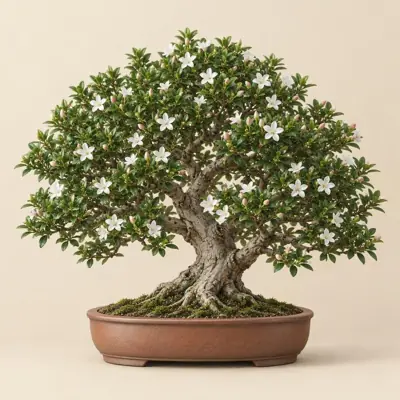
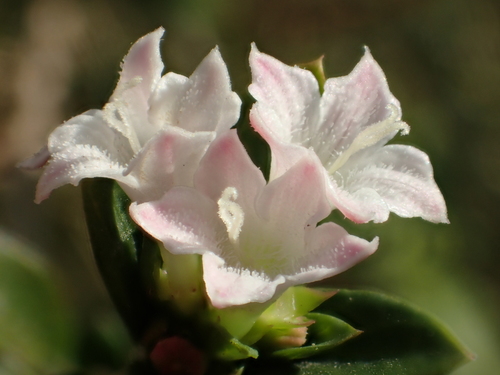
Sources differ, but the few available accounts place mature height at about 45–80 cm; the few available sources report a mature spread of about 91–152 cm. It is generally reported to have small, thick, dark green leaves ranging in shape from elliptic and lanceolate to obovate, usually arranged in opposite pairs; some cultivated forms are variegated, and the leaves produce an unpleasant odor when rubbed or damaged. The small flowers are generally reported to be white and funnel-shaped, with pink buds that may turn white; cultivated plants may also have pale lavender, pink, or double flowers. Sources differ on flowering, but describe a long flowering period that may extend from spring through autumn or nearly year-round in some conditions, with possible repeat flowering in autumn in warm areas; the fruit is generally reported to be a capsule with persistent calyx lobes and elliptical seeds, while cultivated plants in Japan usually do not fruit.
Light
Serissa japonica needs abundant light; partial sun to partial shade, with morning sun while avoiding strong afternoon sun, is recommended.
Watering
Maintain consistent moisture while avoiding waterlogging, as excessively wet or dry conditions may cause leaf drop; use a well-drained medium and avoid irrigation water with high lime content.
Temperature and dormancy
The few available sources report a minimum temperature of about -5 °C.
Growing medium and mounting
Use a fertile, well-drained medium; a highly free-draining bonsai medium made from akadama, volcanic rock, pumice or very fine gravel together with finely screened potting soil is also recommended.
Feeding
Feeding is generally reported to be especially important during the long flowering period.
Propagation
It is generally reported to be relatively easy to propagate from cuttings.
Common problems
It may be affected by spider mites, scale insects, and mealybug-type pests. Powdery mildew may occur, and waterlogging or poor drainage can be associated with root rot. Excessive watering, insufficient water, excessive cold or heat, or sudden relocation may cause leaf drop; suitable conditions generally allow renewed growth. It is sensitive to sharp temperature changes and may lose its evergreen character in sufficiently cold conditions, although it has some short-term cold tolerance.
Identification
Serissa japonica forms a compact, highly branched shrub crown and is distinguished by small leaves, a long flowering period, small star-shaped to funnel-shaped flowers, and leaves that smell unpleasant when rubbed. Its rough gray trunk becomes paler with age, and the plant is often used for bonsai.
Photos


Sources
- GBIF Backbone: Serissa japonica (Thunb.) Thunb. — CC BY 4.0 · link
- 維基百科:六月雪 — CC BY-SA 4.0 · link
- Wikipedia (en): Serissa japonica — CC BY-SA 4.0 · link
- Wikipedia (ja): ハクチョウゲ — CC BY-SA 4.0 · link
- Wikipedia (de): Junischnee — CC BY-SA 4.0 · link
- Wikipedia (fr): Neige de juin — CC BY-SA 4.0 · link
- Wikipedia (es): Serissa japonica — CC BY-SA 4.0 · link
- NC State Plant Toolbox: Serissa japonica — copyright (facts only) · link
- USDA PLANTS Database: Serissa japonica — Public domain (US Government work) · link