
bird-of-paradise (Strelitzia reginae)
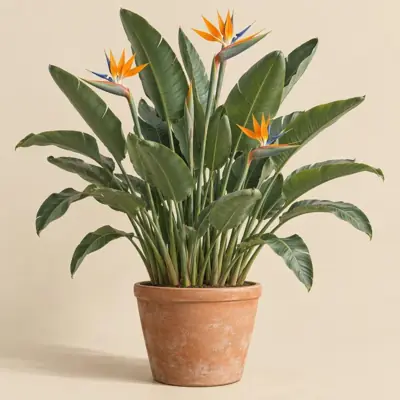
Strelitzia reginae is an evergreen, clump-forming perennial herb with underground rhizomes and basal leaves that form a fan-shaped or clumping habit.
Overview
Strelitzia reginae is an evergreen, clump-forming perennial herb with underground rhizomes and basal leaves that form a fan-shaped or clumping habit.
Origin and habitat
Strelitzia reginae is native to South Africa, including the Cape region and the eastern coast to KwaZulu-Natal. In its native range, it is reported from riverbanks, forest clearings, and coastal environments. It is reported to suit warm, sunny conditions and is widely cultivated in tropical, subtropical, and other warm regions, while also being commonly grown indoors in temperate regions.
Characteristics
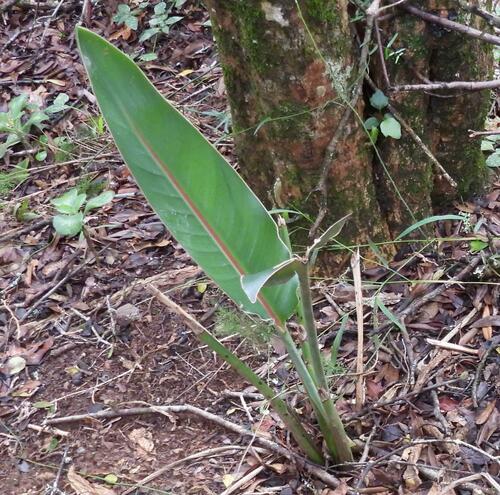
Sources differ on mature height, placing it at about 80–200 cm, while the few available sources report a mature spread of about 50–100 cm and generally describe growth as slow. The leaves are reported to be large and tough, gray-green to green, ovate-oblong to oblong, with entire margins and long petioles; they may be arranged in ranks to create a fan-shaped appearance. The inflorescences rise on long flower stalks above the foliage, with a beak-shaped spathe and flowers opening successively; typical flowers have orange outer perianth segments and blue to violet-blue inner segments, with some inner segments fused into an arrow shape, while some cultivars or subspecies may have yellow or white flowers. Sources differ on flowering period, describing intermittent flowering throughout the year with a more abundant flowering period in part of the year; the fruit is reported to be a leathery to woody, chambered capsule with seeds bearing orange, fuzzy arils.
Light
Strelitzia reginae needs bright light and can grow from full sun to partial sun; indoors it should be placed in a bright, well-lit, sunny position. Insufficient light may prevent flowering, while plants grown under glass in hot, intense light can be given some shade.
Watering
During the growing season, water moderately to generously so the growing medium remains moist but well drained; reduce watering in winter while avoiding complete drying of the medium. Standing water and poor drainage may cause root rot.
Humidity and airflow
It generally prefers moderate humidity and needs moderate airflow.
Temperature and dormancy
Sources differ on the lower temperature limit, placing it at about -5 °C. The few available sources place the upper temperature limit at about 45 °C. Sources differ on its hardiness-zone classification, while it is generally reported to tolerate brief light frost.
Growing medium and mounting
Strelitzia reginae prefers fertile, organic-rich, well-drained loamy growing medium; sources also list loamy and sandy soils and indicate that acidic, neutral, or alkaline conditions can be acceptable.
Feeding
Fertilize regularly during spring and summer or during active growth; sources mention balanced liquid fertilizer, slow-release fertilizer, and compost, with regular feeding during the growing period.
Common problems
Strelitzia reginae is sensitive to severe frost; colder conditions may damage the leaves and cause them to disappear, while mature plants can briefly withstand light freezing and young plants require protection.
Identification
Its most distinctive features are the large fan-shaped clump of leaves, beak-shaped spathe held above the foliage, and vivid orange-and-blue flowers, with the overall inflorescence resembling a bird's head.
Photos


Sources
- GBIF Backbone: Strelitzia reginae Banks — CC BY 4.0 · link
- Wikipedia (en): Strelitzia reginae — CC BY-SA 4.0 · link
- 維基百科:鹤望兰 — CC BY-SA 4.0 · link
- Wikipedia (de): Paradiesvogelblume — CC BY-SA 4.0 · link
- Wikipedia (fr): Strelitzia reginae — CC BY-SA 4.0 · link
- Wikipedia (es): Strelitzia reginae — CC BY-SA 4.0 · link
- GBIF descriptions: Lista de especies de plantas exóticas y trasplantadas de Colombia; Catálogo de Plantas y Líquenes de — per dataset · link
- NC State Plant Toolbox: Strelitzia reginae — copyright (facts only) · link
- Wikipedia (it): Strelitzia reginae — CC BY-SA 4.0 · link
- Wikipedia (nl): Paradijsvogelbloem — CC BY-SA 4.0 · link
- Wikipedia (pt): Strelitzia reginae — CC BY-SA 4.0 · link
- TaiCOL 臺灣物種名錄: Strelitzia reginae — CC BY 4.0 · link
- RHS Plants: Strelitzia reginae — © RHS, facts only · link
- Top Tropicals catalog: Strelitzia reginae — © Top Tropicals LLC (facts only) · link