
Bilberries (Vaccinium virgatum)
Vaccinium is reported to include perennial woody plants ranging from shrubs to dwarf shrubs; depending on the species, they may be creeping or upright, some tropical species may be epiphytes, and the stems are usually woody.
Track your Bilberries in the PLNTverse app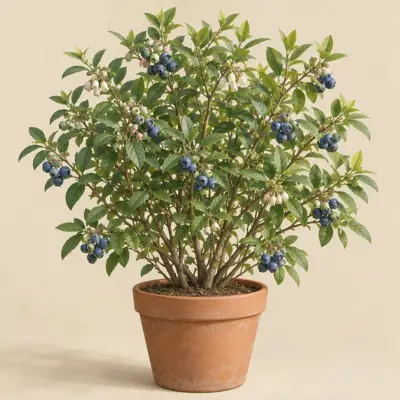
Overview
Vaccinium is reported to include perennial woody plants ranging from shrubs to dwarf shrubs; depending on the species, they may be creeping or upright, some tropical species may be epiphytes, and the stems are usually woody.
Origin and habitat
Vaccinium is reported to be widely distributed, occurring mainly in cooler parts of the Northern Hemisphere, while some species occur in tropical regions such as Madagascar and Hawaii; it is widespread outside Australia and Antarctica, with greater diversity in mountainous areas of South and North America and in Southeast Asia, and many species are native to North America. In the wild, it is reported from heathlands, peat bogs, and acidic woodlands, including beneath oaks or pines, and it can occur in both successional environments and stable habitats; the roots commonly form mycorrhizae that help obtain nutrients in acidic, nutrient-poor soils. Most species are reported from cooler parts of the Northern Hemisphere, but the genus also includes tropical species, some of which are evergreen in tropical biogeographic regions.
Characteristics
Based on few sources, mature height and spread are reported to range about 15.24–365.76 cm. Leaves are reported to be simple and alternate, commonly elliptic to ovate but sometimes lanceolate, with margins that may be entire; they are generally green to blue-green, paler beneath and sometimes glaucous, while the genus includes evergreen, semi-evergreen, and deciduous types, with deciduous foliage that may turn red, yellow, orange, or bronze in autumn. Flowers are reported to be usually small, with fused petals, commonly urn-shaped or bell-shaped and white to pink; they may occur in racemes, singly, or in spikes, in axillary or terminal positions, and the anthers have extended tubular structures, with flowering reported in spring. The fruit is reported to be a berry whose mature color varies by species and may include vivid blue or red; it develops from an inferior ovary, has a lobed crown at the end, and contains small, smooth seeds, while some blueberry-type fruits change from green through pinkish red to blue with a glaucous coating when mature.
Growing medium and mounting
Vaccinium is reported to prefer or require acidic soil, and wild species also commonly grow in acidic, nutrient-poor soils.
Common problems
Reported pests include scale insects, leafhoppers, whiteflies, leaf-rolling caterpillars, aphids, and bud mites, while birds feeding on fruit may also cause substantial losses. Reported disease problems include stem blight, twig blight, leaf diseases, mummy berry, Exobasidium leaf and fruit spot, anthracnose fruit rot, Botrytis flower and fruit rot, and powdery mildew. Birds are reported to feed heavily on ripe fruit, and the source suggests covering individual plants or groups of plants with netting to reduce losses. Climate adaptation is reported to vary widely within the genus; some cultivars tolerate heat, and wild Vaccinium in many regions can tolerate low-intensity fire and resprout from underground stems after aboveground growth is burned.
Identification
Woody shrubs are reported to often have clustered branches, with older stems brown and peeling and young stems yellow-green before turning red in winter; other reported features include urn-shaped white to pink flowers and a lobed crown at the end of the fruit.