
cultivated garlic (Allium sativum)
Allium sativum is a perennial herbaceous bulbous plant. The plant itself is perennial, but in cultivation it is often grown as an annual vegetable.
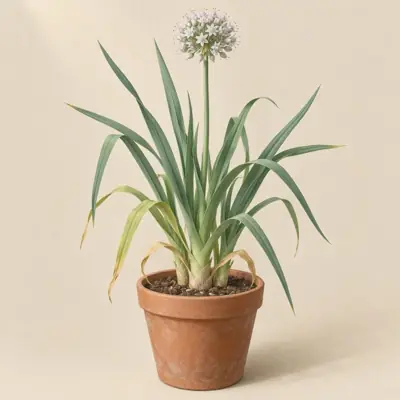
Overview
Allium sativum is a perennial herbaceous bulbous plant. The plant itself is perennial, but in cultivation it is often grown as an annual vegetable.
Origin and habitat
Sources differ on its native range: Central Asia is the most consistent description, while some sources also include West Asia, northeastern Iran, and the Himalayan foothills. Its original wild habitat is unknown, and sources indicate that no truly wild state is currently known; today it is mainly cultivated and may occasionally escape cultivation. Sources describe it as originally adapted to a warm-temperate climate with a distinct cold season, short winter days, and long summer days; it can also be cultivated in varied climates and many parts of the world, with higher elevations being more suitable in tropical regions.
Characteristics
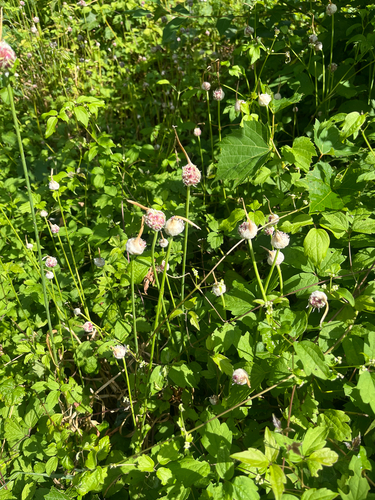
Sources differ on mature height, with the limited evidence suggesting about 30–120 cm, while a single source reports a mature spread of about 10–50 cm. The leaves are narrow, flat, linear, and pointed at the tip, and may range from pale green to blue-green. Sources differ in their descriptions of flowering: bisexual flowers occur in umbels on upright flower stalks and may be white, greenish white, pink, or pinkish purple; many cultivars rarely flower, and the inflorescences may also form bulbils. Sources differ on flowering time, generally describing flowering in summer but also recording a different flowering period in Japan; fruit is generally reported to be a three-chambered capsule, although cultivated plants rarely form fruit and more commonly produce bulbils on the flower stalk.
Light
Allium sativum grows in full sun.
Watering
The soil should be well drained, and watering should be reduced before harvest to lower the risk of bulb rot.
Temperature and dormancy
A single source suggests a lower temperature of about -10 °C, an ideal range of about 18–30 °C, and an upper temperature of about 35 °C; sources are few for these figures. A single source reports its hardiness as RHS H4.
Growing medium and mounting
Loose, fertile, well-drained soil is suitable; RHS lists loam, sand, or chalky soil with a neutral or alkaline reaction.
Propagation
Allium sativum is propagated mainly vegetatively from cloves: the bulb is separated into individual cloves for planting, and each clove can grow into a new plant. Some plants also form bulbils.
Common problems
Bulb mites are reported to occur. A single source reports that excessive moisture before harvest increases the risk of bulb rot and that surface mulching can help suppress weed competition. A single source reports that growth and bulb formation are influenced by seasonal changes in temperature and day length, and that higher elevations are more suitable for cultivation in tropical regions.
Identification
Allium sativum forms a strongly scented underground bulb, usually composed of multiple separate cloves; each clove has enclosing leaves, and the whole bulb is covered by a papery membrane. Sources differ in descriptions of the height of its upright flower stalk.
Photos


Sources
- Wikipedia (en): Garlic — CC BY-SA 4.0 · link
- 維基百科:蒜 — CC BY-SA 4.0 · link
- Wikipedia (ja): ニンニク — CC BY-SA 4.0 · link
- Wikipedia (de): Knoblauch — CC BY-SA 4.0 · link
- Wikipedia (fr): Ail cultivé — CC BY-SA 4.0 · link
- Wikipedia (es): Allium sativum — CC BY-SA 4.0 · link
- GBIF descriptions: Checklist of introduced taxa in Cyprus; Database of Vascular Plants of Canada (VASCAN); Listado de e — per dataset · link
- NC State Plant Toolbox: Allium sativum — copyright (facts only) · link
- TaiCOL 臺灣物種名錄: Allium sativum — CC BY 4.0 · link
- Useful Tropical/Temperate Plants: Allium sativum — CC BY-NC-SA 3.0 (facts only) · link
- RHS Plants: Allium sativum — © RHS, facts only · link
- USDA PLANTS Database: Allium sativum — Public domain (US Government work) · link