
grapefruit (Citrus paradisi)
Citrus paradisi is a perennial evergreen fruit tree of small to medium stature.
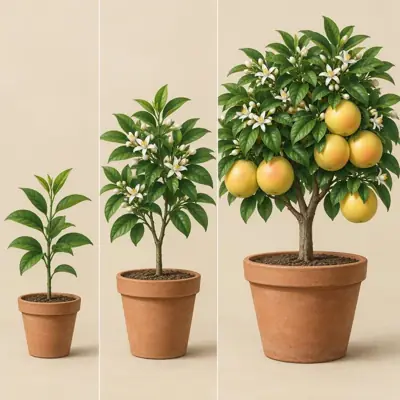
Overview
Citrus paradisi is a perennial evergreen fruit tree of small to medium stature.
Origin and habitat
Sources differ on its origin; it is described as originating in Barbados in the Caribbean as a citrus hybrid between sweet orange and a pomelo-type parent. It is suited to tropical to subtropical environments with frost-free or warmer winters; in colder areas it can be grown in containers and moved indoors for winter. It is reported to occur in cultivated settings and is now cultivated in tropical and subtropical regions in many parts of the world.
Characteristics
Mature plants reach 450–1500 cm in height. Reported mature spread is about 300–900 cm, based on few sources. The leaves are dark green, thin to leathery, narrow to ovate, sometimes glossy, and borne on winged petioles. The fragrant white flowers may be solitary or borne in small inflorescences, while sources differ on the number of petals; the large citrus fruits are usually nearly round to flattened-globose, with yellow to yellow-orange or sometimes pinkish peel and segmented, juicy flesh ranging from pale yellow or white through pink to deep red, with predominantly acidic flavor accompanied by sweetness and bitterness that varies by cultivar.
Light
Citrus paradisi requires full sun and does not tolerate shade; indoor plants need bright light.
Watering
Water regularly, keeping the growing medium moist but well drained and avoiding overwatering; the surface can be allowed to dry slightly before watering again. Established plants have some drought tolerance.
Temperature and dormancy
It is generally associated with warm hardiness conditions. The reported ideal temperature is about 25–30 °C, based on few sources. It is generally frost tender and should be kept above freezing.
Growing medium and mounting
It generally prefers deep, well-drained loam that retains moderate moisture and an acidic reaction; it is sensitive to high salinity but can also adapt to neutral or alkaline soils with appropriate fertilization.
Feeding
Appropriate fertilization is generally needed when it is grown in neutral or alkaline soils.
Propagation
Grafting is preferred for propagation because seedlings are not guaranteed to retain cultivar characteristics. Seeds from fruit can also germinate relatively readily.
Common problems
Overwatering should generally be avoided, and high salinity is unfavorable for growth. It is sensitive to frost and freezing; in cold areas it needs container cultivation and protection indoors during winter.
Identification
It is reported to bear large citrus fruits with an acidic, sweet, and slightly bitter flavor, flesh ranging from pale yellow to deep red, and fruits that may grow in clusters on the branches.
Photos


Sources
- GBIF Backbone: Citrus × paradisi Macfad. — CC BY 4.0 · link
- Wikipedia (en): Grapefruit — CC BY-SA 4.0 · link
- 維基百科:葡萄柚 — CC BY-SA 4.0 · link
- Wikipedia (ja): グレープフルーツ — CC BY-SA 4.0 · link
- Wikipedia (de): Grapefruit — CC BY-SA 4.0 · link
- Wikipedia (fr): Citrus ×paradisi — CC BY-SA 4.0 · link
- Wikipedia (es): Citrus × paradisi — CC BY-SA 4.0 · link
- NC State Plant Toolbox: Citrus paradisi — copyright (facts only) · link
- Wikipedia (it): Citrus × paradisi — CC BY-SA 4.0 · link
- Wikipedia (nl): Grapefruit — CC BY-SA 4.0 · link
- Wikipedia (pt): Toranja — CC BY-SA 4.0 · link
- Useful Tropical/Temperate Plants: Citrus paradisi — CC BY-NC-SA 3.0 (facts only) · link
- Top Tropicals catalog: Citrus paradisi — © Top Tropicals LLC (facts only) · link