
litchi (Litchi chinensis)
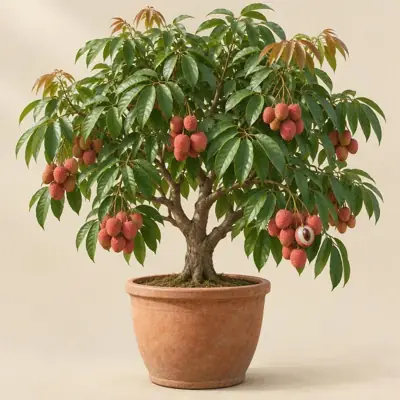
Litchi chinensis is an evergreen fruit tree that grows into a large tree with a dense, spreading crown. It is reported to be perennial.
Overview
Litchi chinensis is an evergreen fruit tree that grows into a large tree with a dense, spreading crown. It is reported to be perennial.
Origin and habitat
Its core native range is southern China, while sources differ on whether its natural or native range also extends to Cambodia, Vietnam, and the Philippines. It is adapted to tropical to warm subtropical environments, and its long cultivation history has made the present status of wild forms unclear, with some sources considering genuinely wild forms difficult to confirm. It prefers warm to hot conditions, with hot, humid, rainy spring and summer conditions and a short, drier, cool, frost-free winter; in tropical regions, some elevation may be more suitable because of its winter chilling requirements.
Characteristics
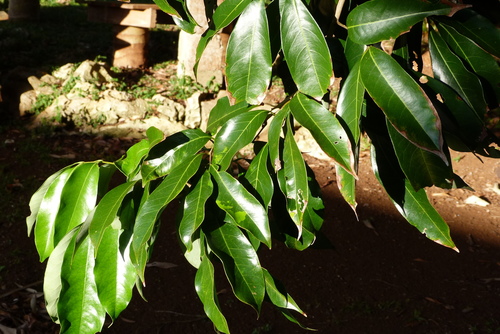
Sources differ on mature height, placing it at about 400–2000 cm, and growth is slow. It is reported to have evergreen, even-pinnate compound leaves with several pairs of mostly lanceolate to ovate-lanceolate leaflets; young leaves can be bronze-colored. The small, densely clustered yellow-green flowers form inflorescences and can attract bees; other sources also record flies, ants, and wasps as pollinators, and flowering is reported to occur mainly in spring. The fruit is ovoid to nearly spherical, with a rough skin bearing raised or scale-like patterns that can become bright red, purplish red, dark red, or pinkish red at maturity; beneath the skin is a white to translucent, juicy, fleshy aril surrounding the seed.
Light
Mature plants do best in full sun, with ample light supporting flowering and fruiting, while seedlings can receive some partial shade during the height of summer.
Watering
Plants need more water and regular watering during active growth while still requiring good drainage; conditions can be drier in winter, and container plants can be watered after the surface soil has dried slightly.
Humidity and airflow
It is generally reported to prefer high humidity.
Temperature and dormancy
Sources differ on the lower temperature figure, with about -5 °C reported. Available sources are few, with about 40 °C reported as the upper temperature figure. A source reports a hardiness-zone range, and the plant tolerates brief light frost.
Growing medium and mounting
It adapts to various soils but requires good drainage; deep, fertile, organic-rich, acidic soil is preferred, and another source specifically identifies slightly acidic sandy loam as ideal.
Feeding
A source recommends attention to micronutrient supply to help avoid deficiency-related chlorosis and reports that plants of fruiting age can have fertilizer withheld before winter to accompany the drier, cooler winter conditions that induce flowering.
Propagation
Air layering is reported as a propagation method and is used in commercial horticulture sources, which do not recommend seed as the main propagation method.
Common problems
Scale insects and spider mites are reported as pests to watch for in cultivation. Micronutrient deficiencies can cause chlorosis, cold and frost can damage young shoots or the whole plant, and excessive rain during flowering and fruiting can increase flower and fruit drop. The plant is sensitive to frost, freezing, and accumulated snow, with young plants especially requiring protection from cold; young shoots can be severely damaged at low temperatures. Mature or dormant plants can tolerate lower temperatures briefly, but the temperature required for safe overwintering is higher than the extreme survival limit.
Identification
It is reported to be an evergreen tree with even-pinnate compound leaves; mature red fruits have a conspicuously rough, tortoiseshell-like or scaly surface, and peeling the skin reveals a translucent fleshy aril surrounding a large seed.
Photos


Sources
- Wikipedia (en): Lychee — CC BY-SA 4.0 · link
- 維基百科:荔枝 — CC BY-SA 4.0 · link
- Wikipedia (ja): レイシ — CC BY-SA 4.0 · link
- Wikipedia (de): Litschibaum — CC BY-SA 4.0 · link
- Wikipedia (fr): Litchi — CC BY-SA 4.0 · link
- Wikipedia (es): Litchi chinensis — CC BY-SA 4.0 · link
- GBIF descriptions: The medicinal plants of Myanmar; Saidabad Water Treatment Plant Project, Phase III — per dataset · link
- Wikipedia (ko): 리치 (식물) — CC BY-SA 4.0 · link
- Useful Tropical/Temperate Plants: Litchi chinensis — CC BY-NC-SA 3.0 (facts only) · link
- USDA PLANTS Database: Litchi chinensis — Public domain (US Government work) · link
- Top Tropicals catalog: Litchi chinensis — © Top Tropicals LLC (facts only) · link