
kidney bean (Phaseolus vulgaris)
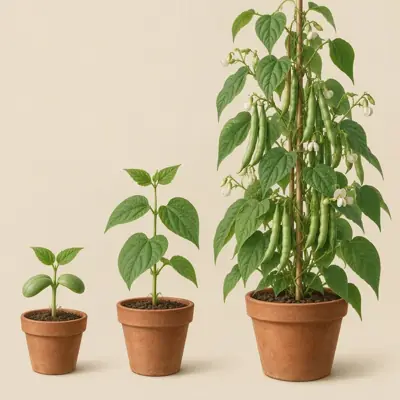
Phaseolus vulgaris is herbaceous, with cultivars that may be climbing, trailing, or compact and bushy. Sources differ in describing its life cycle; it is described as annual.
Overview
Phaseolus vulgaris is herbaceous, with cultivars that may be climbing, trailing, or compact and bushy. Sources differ in describing its life cycle; it is described as annual.
Origin and habitat
Sources differ on the native range, placing it in the Americas, especially tropical America and areas from Central and South America to Mexico, with some accounts pointing more specifically to Central America, South America, or a range from Central to South America. Possible wild forms are reported from drier sites, desert to thorn scrub, hillsides, open pine-oak woodland, scrub margins, and near stone walls. It is a warm-season crop from tropical America, is frost-sensitive, and prefers warm growing conditions.
Characteristics
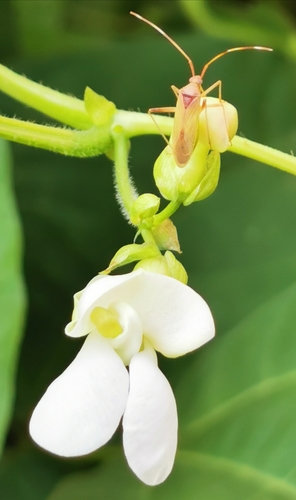
Sources differ on mature height, giving a range of about 20–600 cm, while the few available sources report a mature spread of about 50–100 cm. Leaves are usually compound with leaflets in groups, and may be green or purple; the leaflets range from ovate or oblong to heart-shaped with entire margins, while the first leaves are an opposite pair of simple leaves. The flowers are papilionaceous and may be white, pink, purple, yellow, or red, with multiple stamens whose arrangement is described in greater detail by some sources; the flowers can self-pollinate. The fruit is a pod that may range from green, yellow, or purple to nearly black and contains multiple seeds; the seeds may be spherical, oval, or kidney-shaped, occur in diverse colors, and are often patterned.
Light
Phaseolus vulgaris grows in full sun.
Watering
Keep the soil moist but well drained, avoiding cool, overly wet conditions especially during germination; a sudden large uptake of water by dry seeds may also reduce germination performance.
Temperature and dormancy
The few available sources report a minimum temperature of about 10 °C and an ideal range of about 19–27 °C.
Growing medium and mounting
Phaseolus vulgaris grows in fertile, well-drained soil and can grow in chalk, clay, loam, or sand; it is also described as suited to neutral to alkaline soil that is moist but well drained.
Common problems
It is reported to encounter insect pests associated with vegetables and legumes, and feeding by white-tailed deer has also been reported. Excess moisture during germination can impair germination, especially when combined with low temperatures, and rapid water uptake by dry seeds may also cause poor germination; climbing cultivars generally need support. It is frost-sensitive, while high temperatures can impair reproductive growth, causing flower abortion and reducing seed formation; heavy rain can also interfere with pollination or fertilization.
Identification
Phaseolus vulgaris can be identified by compound leaves with leaflets in groups, typical papilionaceous legume flowers, and pods containing multiple seeds; the species includes distinctly bushy and climbing cultivars.
Photos



Sources
- Wikipedia (en): Phaseolus vulgaris — CC BY-SA 4.0 · link
- 維基百科:菜豆 — CC BY-SA 4.0 · link
- Wikipedia (ja): インゲンマメ — CC BY-SA 4.0 · link
- Wikipedia (de): Gartenbohne — CC BY-SA 4.0 · link
- Wikipedia (fr): Haricot — CC BY-SA 4.0 · link
- Wikipedia (es): Phaseolus vulgaris — CC BY-SA 4.0 · link
- GBIF descriptions: Manual of the Alien Plants of Belgium; Checklist of introduced taxa in Cyprus; Database of Vascular — per dataset · link
- NC State Plant Toolbox: Phaseolus vulgaris — copyright (facts only) · link
- Useful Tropical/Temperate Plants: Phaseolus vulgaris — CC BY-NC-SA 3.0 (facts only) · link
- RHS Plants: Phaseolus vulgaris — © RHS, facts only · link
- USDA PLANTS Database: Phaseolus vulgaris — Public domain (US Government work) · link