
garden pea (Pisum sativum)
Pisum sativum is an herbaceous plant that may be climbing, trailing, or relatively compact. Sources differ in describing its life cycle as annual.
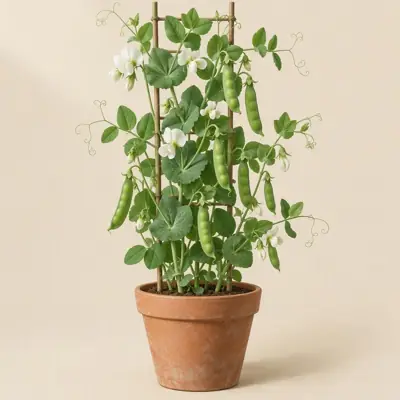
Overview
Pisum sativum is an herbaceous plant that may be climbing, trailing, or relatively compact. Sources differ in describing its life cycle as annual.
Origin and habitat
Sources differ on its precise native range because of its long history of cultivation, although multiple sources support a range around the Mediterranean extending into Southwest Asia and the Near East. It is widely cultivated in agricultural and horticultural settings and is suited to temperate regions as well as higher elevations in the tropics. It is a cool-season crop that prefers cool to mild conditions; it is not suited to summer heat in warm temperate regions or to hot tropical lowlands, but can adapt to cooler tropical highlands.
Characteristics
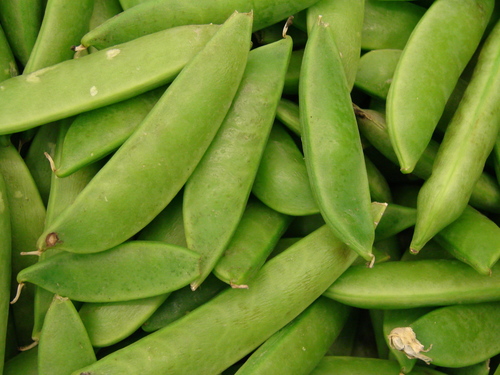
Sources differ on mature height, with figures of about 50–300 cm reported, while a single source reports a mature spread of about 50–100 cm. The compound leaves have relatively large stipules and tendrils that can twine around supports, with leaflets ranging from ovate and elliptic to obovate. The pea-type flowers may be white, purplish red, or pink and may occur singly or in small groups; a single source reports that flowering can begin several weeks after germination. The fruit is a pod that usually contains several seeds.
Light
Full sun is best; partial shade is tolerated, but ample sunlight is more favorable for flowering and fruiting.
Watering
The soil should remain moist but well drained, with water especially needed while pods are developing.
Temperature and dormancy
A single source reports a lower temperature of about 4 °C and an ideal range of about 13–18 °C, so sources are few for these figures. Sources differ on the upper temperature figure, with about 30 °C reported.
Growing medium and mounting
Pisum sativum prefers moist but well-drained soil and can adapt to clay, loam, sand, and calcareous soils.
Feeding
Nitrogen fertilizer is reported to promote stem and leaf growth.
Propagation
Propagation is by seed, which can be sown directly.
Common problems
Potential pests include pea moths, aphids, weevils, thrips, leaf miners, slugs, snails, rodents, and birds. Potential diseases include powdery mildew, downy mildew, root or basal stem rots, Fusarium wilt, gray mold, leaf and pod spots, and viral diseases. It does not tolerate continuous cropping well; heat can suppress growth, and drainage is also an important cultivation constraint. It is sensitive to high temperatures; young growing tissues can suffer severe cold injury near freezing, while mature or dormant plants may have some tolerance of low temperatures.
Identification
It is generally identified by climbing tendrils, typical pea-type flowers, and pods containing multiple seeds; cultivated forms include compact and trailing types.
Photos


Sources
- GBIF Backbone: Pisum sativum L. — CC BY 4.0 · link
- Wikipedia (en): Pea — CC BY-SA 4.0 · link
- 維基百科:豌豆 — CC BY-SA 4.0 · link
- Wikipedia (ja): エンドウ — CC BY-SA 4.0 · link
- Wikipedia (de): Erbse — CC BY-SA 4.0 · link
- Wikipedia (fr): Pois cultivé — CC BY-SA 4.0 · link
- Wikipedia (es): Pisum sativum — CC BY-SA 4.0 · link
- GBIF descriptions: Database of Vascular Plants of Canada (VASCAN); Catálogo de Plantas y Líquenes de Colombia; DAISIE - — per dataset · link
- NC State Plant Toolbox: Pisum sativum — copyright (facts only) · link
- TaiCOL 臺灣物種名錄: Pisum sativum — CC BY 4.0 · link
- Useful Tropical/Temperate Plants: Pisum sativum — CC BY-NC-SA 3.0 (facts only) · link
- RHS Plants: Pisum sativum — © RHS, facts only · link
- USDA PLANTS Database: Pisum sativum — Public domain (US Government work) · link